Renovating or building a house in Costa Brava
A house by the sea has rules of its own. Before drawing the renovation or the new house, it is worth knowing whether the plot is affected by the Ley de Costas and what the town’s planning says.
Three strips from the sea
The Ley de Costas (Law 22/1988, amended by Law 2/2013) organises the land by the sea into strips measured inland from the inner edge of the shoreline:
| Strip | Width | What it means |
|---|---|---|
| Maritime-terrestrial public domain | The shoreline itself | It is public: nothing can be built |
| Right-of-way easement | 6 metres | Must stay clear for public passage |
| Protection easement | 100 metres (20 metres on land that was already urban in 1988) | Limits uses and works |
| Zone of influence | At least 500 metres | Planning avoids screens and concentrations of volume |
The reduction to 20 metres applies to land that in 1988, when the law came into force, already met the conditions of urban land. Costa Brava has plenty of both: old village centres with the reduced strip and more recent developments or plots with the full strip.
Which works can be done inside the easement
The law respects existing buildings, but within the protection easement works have limits. Repair, improvement, consolidation and modernisation works are usually possible, as long as they do not increase volume, height or floor area, and with the relevant authorisation as well as the municipal permit. Each case depends on whether the building is legal, when it was built and what the planning says. That is why the first thing we do with a house by the sea is check the demarcation and the status of the building.
Coastal planning
As well as the Ley de Costas, each town has its own planning scheme, and the Catalan coast has its own instruments that, along many stretches, have protected land that could once be developed. Before buying a plot on the coast, it is worth confirming its current zoning on the Mapa urbanístic de Catalunya and with the City Council.
Second homes: thinking about winter
Many Costa Brava houses are used a few weeks a year. That has design consequences:
- Ventilation and damp. A closed house by the sea needs to deal with condensation.
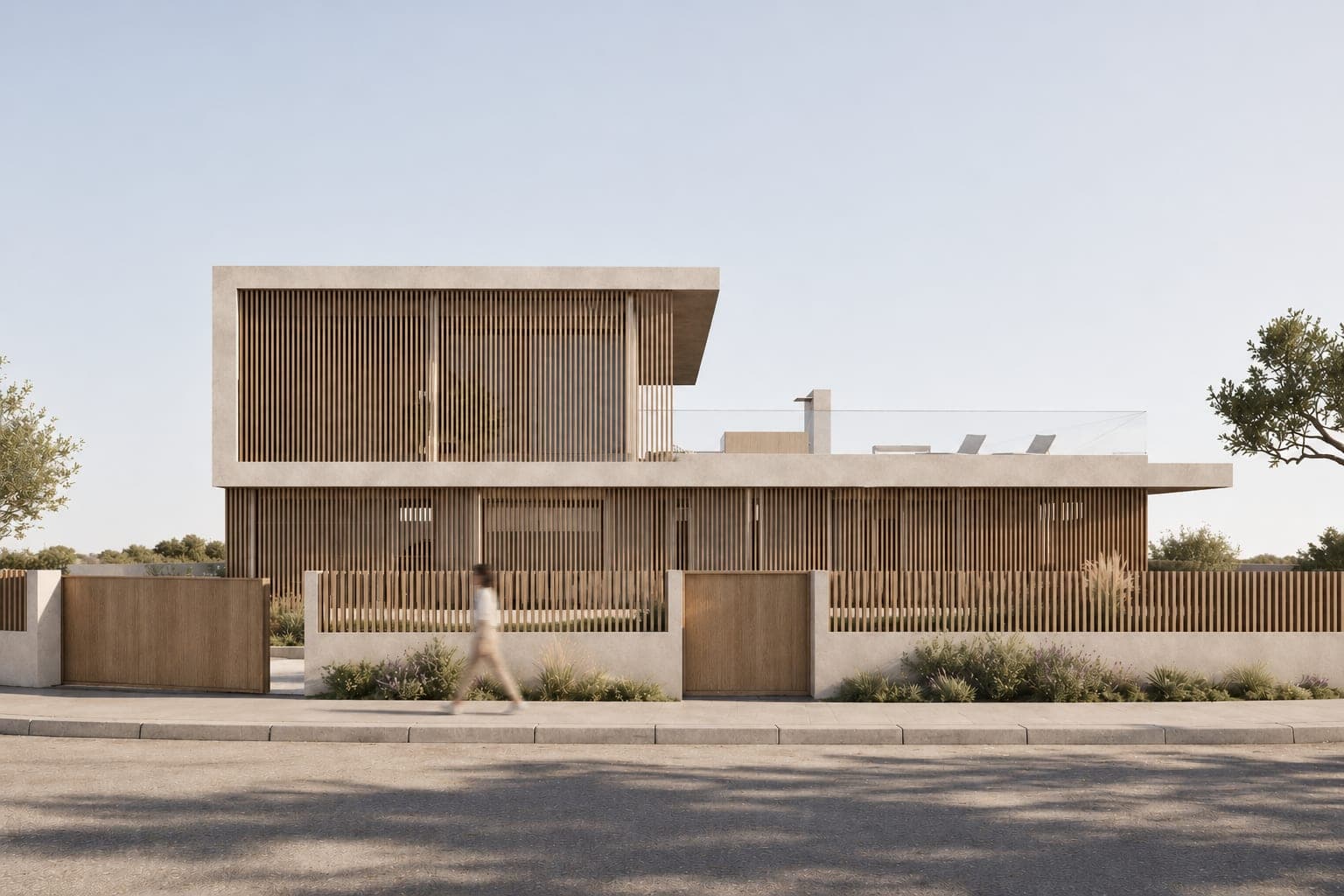
- External sun shading. Slats, screens and porches that filter the summer sun without darkening the house in winter.
- Closures and security that do not turn the house into a bunker when you are away.
- Low maintenance. Materials that age well and do not need constant attention.
Materials for a marine environment
Salt, wind and damp punish materials. Stone, ceramics, lime mortars, timbers suited to outdoor use, and window frames and fittings designed for marine environments all work well. In GR16, a new-build house in Costa Brava, a second skin of slats protects the house from the sun and gives it privacy without closing off the views.
Where to start
The first visit is free. We come to the house or the plot, check the restrictions and tell you what is possible. More about our work on the coast in architects in Costa Brava.
This article summarises public regulations for information purposes. Every case depends on its plot, its building and the current wording of the rules: check before deciding.